Yarddy guide
How to Plan a Yard Sale That Shoppers Can Actually Navigate
Turn a pile of items into a sale that is easy to find, easy to shop, and easy to close down when the day ends.
Start with the outcome, not the folding tables
Decide what success means before choosing a date. A moving sale may prioritize speed and volume, while a neighborhood yard sale may prioritize a friendly experience and fair prices. That decision changes how aggressively you price, how many categories you display, and whether you should donate leftovers immediately after the sale.
Create three groups: definitely sell, donate if unsold, and keep. This prevents last-minute indecision and makes cleanup much faster. Test electronics, clean surfaces, pair accessories with their items, and remove anything unsafe, recalled, prohibited, or too personal to display.
- Set a target for revenue, item reduction, or both.
- Separate high-interest items from low-value bulk items.
- Keep sentimental or undecided items out of the sale area.
- Prepare a donation destination before sale day.
Choose a time buyers can understand
For most local sales, a clear morning start and an afternoon finish are easier to understand than an open-ended schedule. Yarddy defaults local sales to 9:00 AM–4:00 PM because it communicates a useful shopping window without implying that the seller is available all day. If the sale spans several days, show each day's hours instead of presenting one continuous overnight range.
Check the weather, neighborhood rules, parking constraints, and any local permit requirements. If rain is likely, decide in advance whether the sale will move into a garage, use a rain date, or be cancelled. Update the online listing as soon as the plan changes.
Design the physical sale for quick decisions
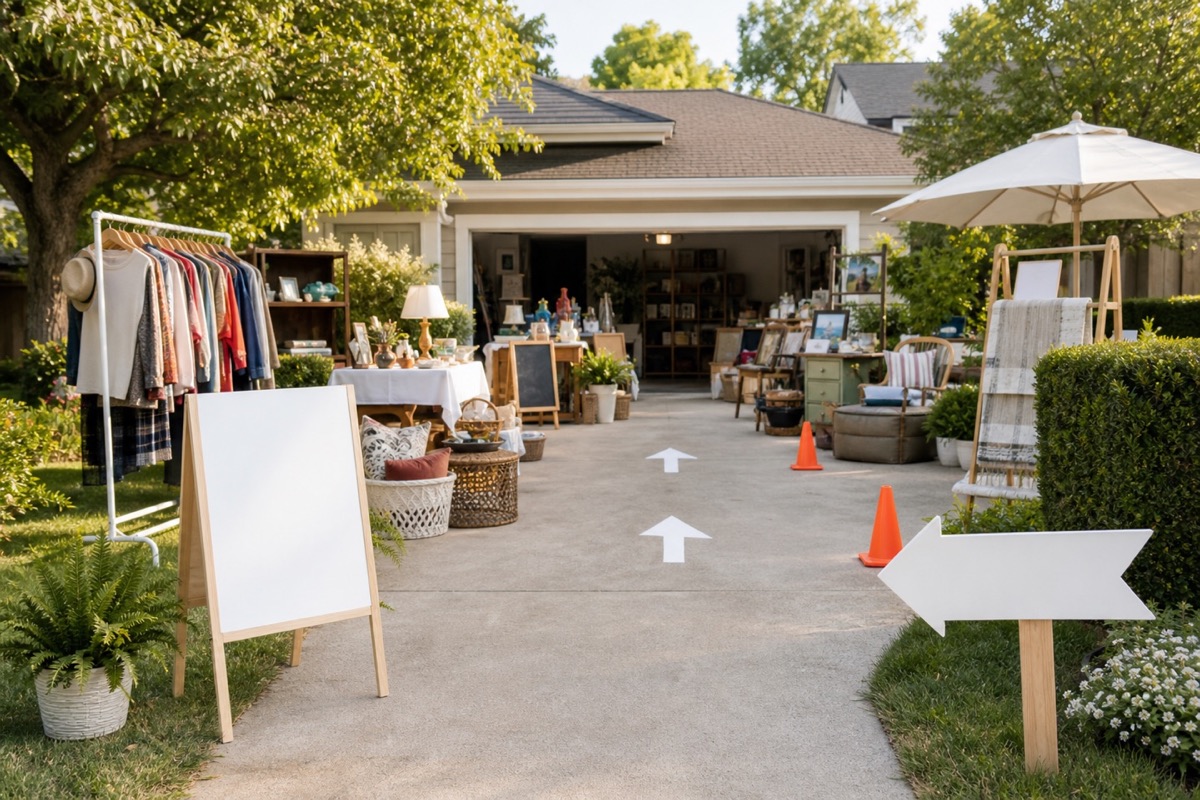
Place the best visual items near the entrance without blocking the walkway. Group items by how shoppers think—kitchen, tools, kids, clothing, books—not by the room where they were stored. Keep fragile items away from narrow paths and place heavy items where they can be loaded safely.
Use readable price labels and a small number of simple signs. Shoppers should not need to ask the price of every item. For categories with many similar low-cost pieces, a clearly marked table such as “Books $1 each” is faster than individual stickers.
- Leave enough space for two people to pass.
- Put sold or reserved items in a separate marked area.
- Keep cash, keys, phones, and personal documents with you.
- Use extension cords only when they can be secured safely.
Publish the information that makes the trip worthwhile
A useful listing answers five questions: what kind of sale is this, what are the standout items, when is it happening, what general area is it in, and what should a buyer know before leaving home? Add several honest photos of the actual sale or items. Avoid stock images and avoid photographing private documents, house numbers, faces, or vehicle plates unless they are intentionally part of the listing.
On Yarddy, the public page can show the city or neighborhood while keeping an exact address restricted. That lets buyers decide whether the sale is relevant before the seller shares a precise meeting or pickup point.
Prepare checkout and cleanup before opening
Have small bills, a secure cash container, bags or boxes, painter's tape, a marker, and a simple method for tracking sold high-value items. If you accept digital payments, verify payment in your own account rather than relying on a screenshot shown by a buyer.
Set a final-hour policy before the sale starts. You might discount selected items, create a free box, or keep prices firm. At closing time, remove signs, bring remaining items inside, update the listing, and move donation items according to the plan you created at the beginning.
Practical example
A one-week Newark sale plan
A seller has furniture, kitchenware, and children's items but only one Saturday available. They publish seven days ahead, photograph the three strongest groups, label prices Friday evening, and keep the exact address private until a shopper confirms interest.
Result: The listing answers the trip-planning questions before Saturday and leaves sale-day work focused on setup, not repeated messages.
Quick-reference table
| Decision | Practical default | Why it helps |
|---|---|---|
| Schedule | Choose real opening and closing hours | Buyers can decide when to arrive |
| Photos | Show the overall sale plus 3 strong groups | Shoppers understand variety |
| Location | Publish city or nearby area first | Preserves privacy before intent |
Practical checklist
- Sort items into sell, donate, and keep groups.
- Confirm date, hours, weather plan, parking, and local rules.
- Clean, test, group, and price the items.
- Photograph the actual sale and its standout items.
- Publish the schedule, general area, and practical buyer notes.
- Prepare secure payment supplies and a closing plan.
- Remove signs and update the listing when the sale ends.
Frequently asked questions
How far ahead should I plan a yard sale?
Start at least one to two weeks ahead when possible so you can sort inventory, choose a realistic schedule, take useful photos, and prepare pricing and signs without rushing.
What information matters most in the listing?
Include the real date and hours, general public area, representative photos, featured inventory, payment expectations, and parking or pickup constraints.
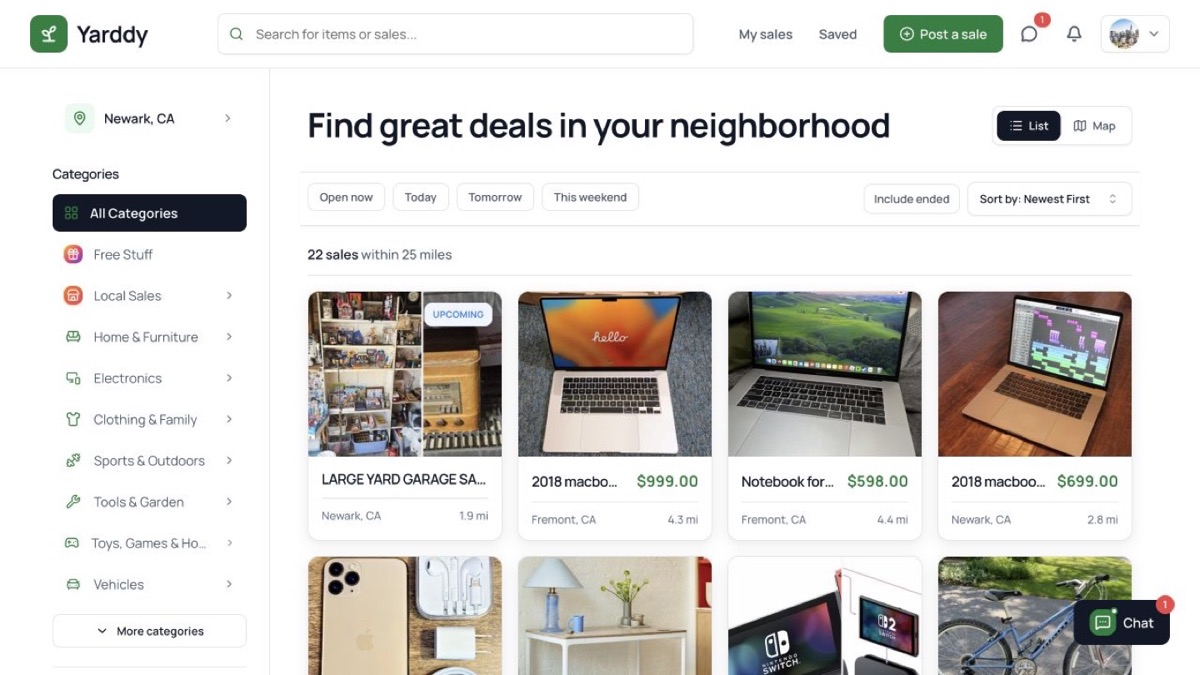
See how active Local Sales present the essentials
Compare current schedules, photos, and featured inventory before publishing your own sale.