Yarddy guide
How to Plan a Yard Sale Shopping Route
A good route is not the one with the most pins. It is the one that reaches your highest-priority sales while they are still useful to visit.
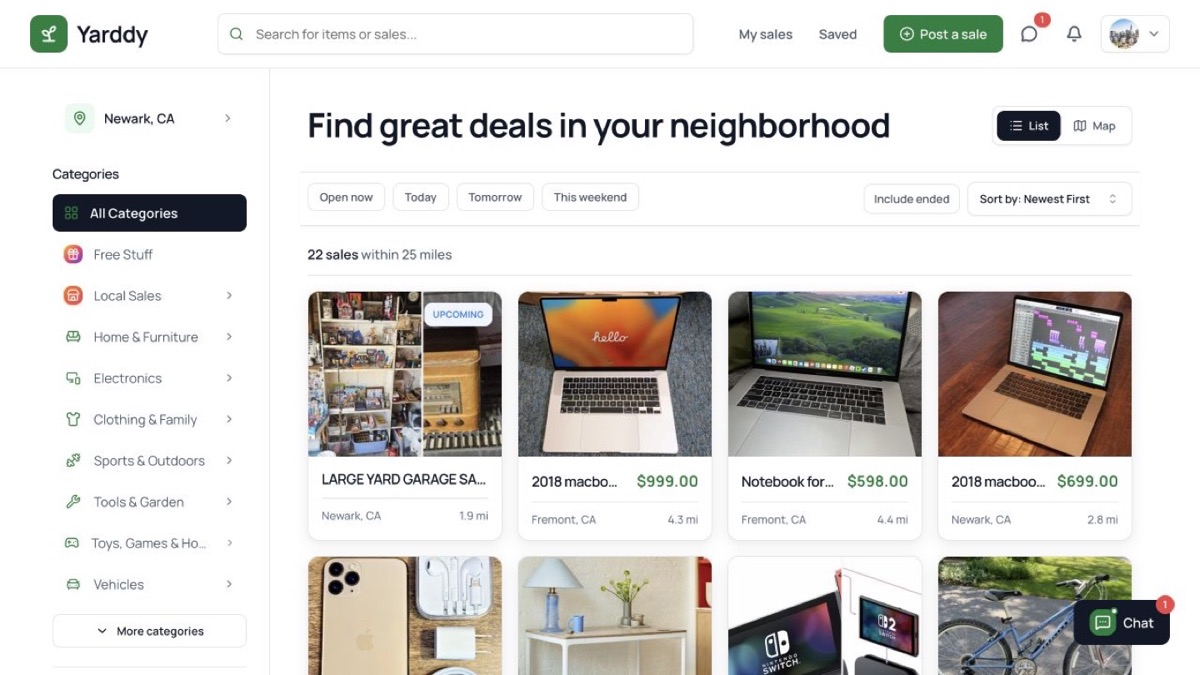
Begin with a short priority list
Write down what you are actually looking for, including dimensions, acceptable condition, and a spending limit. This prevents an inexpensive but unsuitable item from becoming clutter at home. If you are shopping for furniture, measure the destination and the vehicle before leaving.
Separate must-find items from interesting extras. A sale with the right dresser should outrank a closer sale that only has broadly described household goods.
Rank sales by timing and evidence
Give the highest priority to sales with clear current photos, specific inventory, confirmed hours, and recent updates. Early arrival matters for unique items, but a later visit may be better when you are looking for bundles or end-of-day reductions. Do not assume an old highlight is still available; message the seller when one item determines whether the trip is worthwhile.
Check the end time before adding a stop. Route planning should respect the seller's published hours rather than treating every pin as available all day.
Use the map after choosing the right sales
Start in list view because photos and descriptions are faster to compare there. Save the relevant sales, then use the map to understand clusters, bridges, highways, parking constraints, and the travel cost between priorities. Geographic convenience should refine the plan, not replace relevance.
Leave time for browsing, loading a purchase, traffic, and a sale that takes longer than expected. A route with four realistic stops is usually better than ten stops that require constant rushing.
Bring what the plan requires
Carry reusable bags, basic measurements, water, and an appropriate payment method. For larger items, bring moving blankets, straps, and another person when lifting requires it. Never assume a seller can deliver, disassemble furniture, or help load unless the listing says so or you have confirmed it.
Keep purchases secure and out of direct view when you continue to other stops. Do not leave children, pets, or valuables unattended in a vehicle.
Know when to skip a stop
Skip or leave when the location conflicts with the listing, the seller changes the terms unexpectedly, the item is materially different from its description, or the situation feels unsafe. A route is a plan, not an obligation. Update it as listings change and as you learn what is actually available.
Practical example
Choosing three realistic Saturday stops
A shopper saves five sales, removes two with overlapping closing times, starts with the estate sale that opens earliest, then visits two nearby garage sales whose photos show the furniture and tools they actually want.
Result: The final plan favors inventory fit and operating hours before using distance as the tie-breaker.
Quick-reference table
| Signal | Use it for | Avoid |
|---|---|---|
| Hours | Removing impossible overlaps | Assuming every sale lasts all day |
| Photos | Judging trip value | Adding stops with unclear inventory |
| Distance | Ordering compatible stops | Choosing proximity over relevance |
Practical checklist
- List target items, measurements, acceptable condition, and budget.
- Prioritize specific, recently updated listings.
- Confirm the one item that makes a distant trip worthwhile.
- Check sale hours before ordering the route.
- Use list view for relevance and map view for travel planning.
- Allow time for parking, browsing, loading, and delays.
- Bring the bags, measurements, payment, and loading equipment you need.
Frequently asked questions
How many yard sales should I plan to visit?
A short list of two to six well-documented sales is usually more realistic than a long route built from uncertain listings.
Should distance or opening time come first?
Start with the sales that best match your priorities, then use opening windows and distance to remove conflicts and unnecessary travel.
Build a short list from current sales
Compare active dates and public-area locations, then save only the stops worth considering.