Yarddy guide
What to Do with Unsold Yard Sale Items
Make the post-sale decision while the items are already sorted, documented, and ready to move.
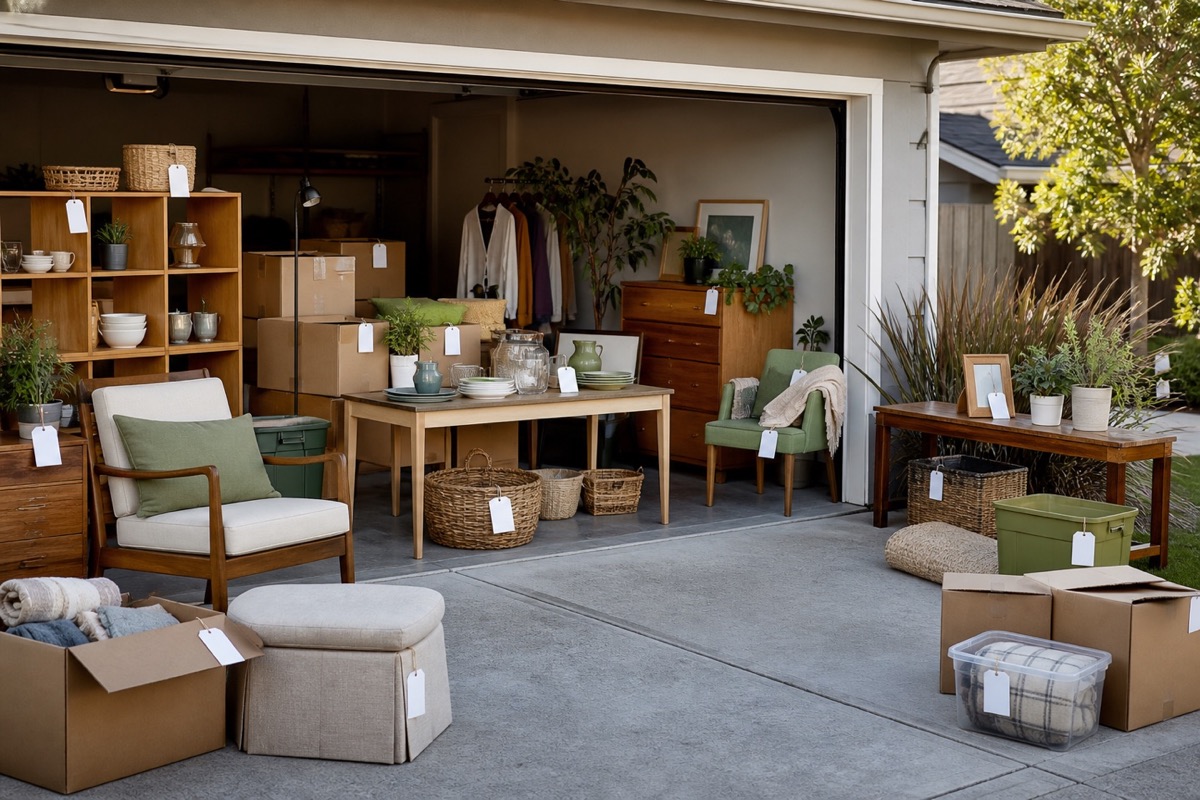
Do not recreate the original pile
The easiest mistake after a sale is carrying every unsold item back into storage without deciding what happens next. Keep the categories separate and use the work you already completed. The items are cleaned, photographed, tested, and grouped, so the end of the sale is the best time to choose a next step.
Create five outcomes: keep intentionally, relist individually, bundle for another local sale, donate, and recycle or dispose responsibly. Give each item one outcome rather than an indefinite waiting area.
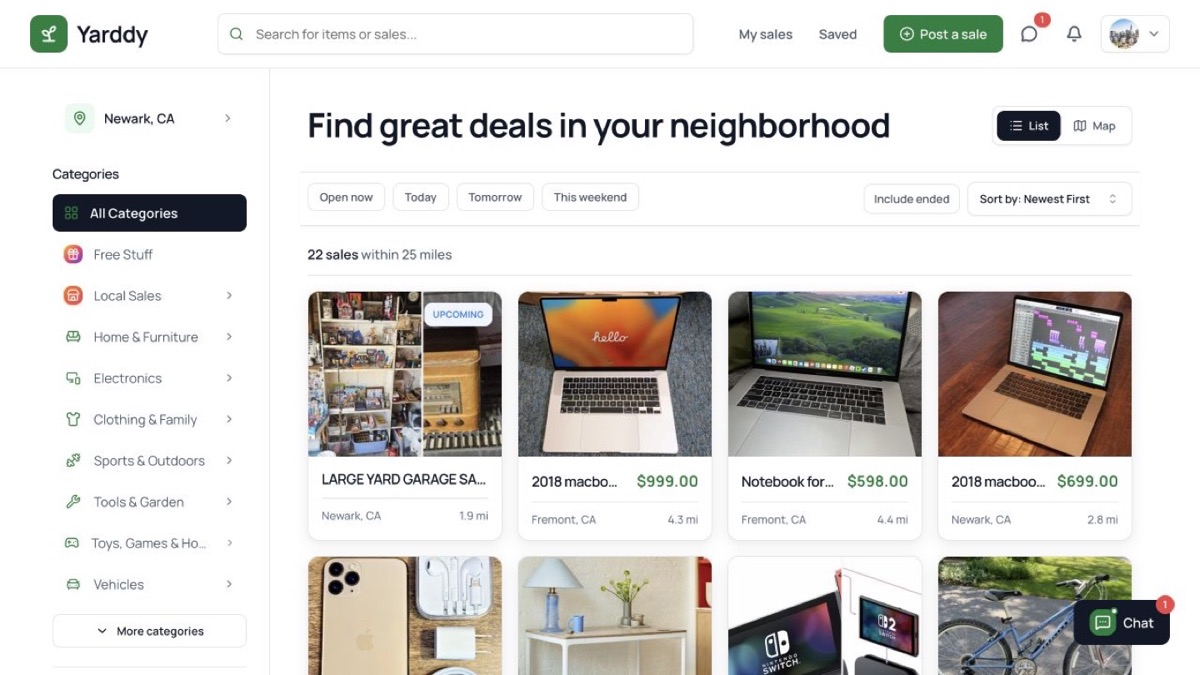
Relist only when the item justifies another transaction
Higher-value furniture, tools, working electronics, collectibles, and complete specialty items may deserve an individual listing. Improve the title, add measurements or model information, show any flaw clearly, and reconsider the price based on the response from the sale.
Avoid individually relisting dozens of low-value objects if coordinating each pickup will cost more time than the items are worth. Related items often work better as a clear bundle.
Donate items that are genuinely useful
Donation is not a substitute for disposal. Confirm what a specific organization accepts before loading the vehicle. Items should be clean, safe, legal, and usable. Many organizations cannot accept damaged furniture, recalled products, opened personal-care items, certain mattresses, hazardous materials, or obsolete electronics.
Ask whether the organization provides a receipt and what information it includes. Yarddy does not provide tax advice; keep the organization's documentation and consult an appropriate tax professional if you need guidance about a deduction.
Use category-appropriate recycling
Electronics, batteries, paint, chemicals, appliances, and some building materials should not be placed in ordinary household trash. Use official municipal or manufacturer resources to find an appropriate program. Remove personal data from phones, computers, drives, printers, and connected devices before transfer or recycling.
Textiles that are not suitable for resale may have local textile-recovery options. Cardboard, clean metal, and other materials should be separated according to local requirements rather than placed into a donation bin indiscriminately.
Close the listing and the physical sale
Mark the sale as ended, remove temporary signs, respond to any open buyer commitments, and avoid leaving free items at the curb unless local rules allow it and you can remove anything that remains. Store only the items you intentionally chose to keep or relist, with a specific review date for anything that still needs action.
Practical example
Closing out a sale without storing everything again
After a moving sale, a seller keeps one valuable desk for a focused Item listing, offers usable packing supplies for free pickup, schedules clean clothing for donation, and sends damaged particleboard to the locally approved disposal stream.
Result: Each remaining item gets a next step based on condition, value, effort, and the seller's moving deadline.
Quick-reference table
| Item state | Best next step | Check first |
|---|---|---|
| Valuable and easy to describe | Relist as an Item | Demand and pickup effort |
| Useful but low value | Free pickup or donation | Recipient acceptance rules |
| Unsafe or unusable | Recycle or dispose | Local material requirements |
Practical checklist
- Assign every unsold item to keep, relist, bundle, donate, recycle, or dispose.
- Relist only items worth another round of communication and pickup.
- Confirm donation acceptance rules before traveling.
- Remove personal data from electronics.
- Use official programs for hazardous or regulated materials.
- Remove sale signs and update the online listing.
- Set a deadline for any items kept for later action.
Frequently asked questions
Should I relist everything that did not sell?
No. Relist items only when the likely value justifies more photos, messages, storage, and pickup coordination.
When is donation better than another sale?
Donation is often better when the item is useful, the resale value is modest, and a fast handoff is more valuable than another selling cycle.
See what is still moving locally
Compare active sales and free-item listings before choosing whether to relist, donate, or recycle.