Yarddy guide
A Practical Yard Sale Pricing Guide
Use condition, demand, completeness, and your real goal—not the original retail price—to set prices shoppers can act on.

Price for today's decision
The original price is useful context, but it does not determine what an item is worth at a local sale. A buyer is comparing condition, convenience, completeness, and the risk that the item may not work as expected. Your own goal matters too: a seller clearing a home before a move usually needs a different price than someone willing to wait several weeks for the right buyer.
Start with a realistic local resale range, then adjust for condition and urgency. If the item needs repair, is missing parts, has odors, or cannot be tested, say so and price the uncertainty into the offer.
Use a repeatable pricing method
For each meaningful item, estimate a clean, complete used value. Subtract for visible wear, missing parts, difficult transportation, or limited demand. Add value only for something a buyer can verify, such as a recent professional service, included accessories, original packaging, or a transferable warranty.
Round to amounts that are easy to discuss and pay. A yard sale is not the right setting for overly precise prices such as $17.83. Clear numbers reduce negotiation time and make category signs easier to scan.
- Like new: clean, complete, tested, and showing minimal wear.
- Good: fully usable with normal cosmetic wear.
- Fair: usable but visibly worn, incomplete, or in need of a minor repair.
- Parts or project: not represented as fully working.
Think differently by category
Furniture depends heavily on condition, style, dimensions, and pickup difficulty. Include measurements and price large pieces low enough to justify transportation. Clothing sells more easily when it is clean, sorted by size, and grouped into simple price levels. Tools should be tested when possible, with batteries and chargers matched to the correct item.
Electronics need honest model information, storage or capacity details, and a clear statement about testing. Toys and games should be checked for missing pieces. Books, kitchen utensils, and common décor often work better as simple group prices or small bundles than as individually researched items.
Plan for negotiation without inflating every label
If you are open to offers, leave modest room rather than doubling the price. Excessively inflated labels make the entire sale feel unreliable. For high-interest items, decide your lowest acceptable amount privately and do not negotiate against yourself before a buyer makes an offer.
Bundle discounts are useful when they help you reach the sale's objective. A clear offer such as “three children's books for $2” is easier than an improvised discount that changes from buyer to buyer.
Know when free is the better price
Low-value items can consume more display space and conversation than they are worth. A small free box may bring shoppers in, help useful objects avoid disposal, and reduce closing work. Do not place unsafe, recalled, broken, or unsanitary items in a free area simply to avoid handling them responsibly.
Practical example
Pricing a used dresser to move this weekend
A solid-wood dresser has light wear and comparable local asking prices near $140. The seller values a fast pickup, lists it at $110, discloses the scratches, and plans a clearly announced afternoon reduction only if it remains.
Result: The price reflects both condition and the seller's deadline without using an unrealistic original retail anchor.
Quick-reference table
| Signal | Raise confidence | Reduce price |
|---|---|---|
| Condition | Clean, working, documented | Damage or missing parts |
| Pickup | Easy access and flexible window | Stairs, disassembly, urgent removal |
| Evidence | Measurements and model details | Unverified brand or function |
Practical checklist
- Define whether speed, revenue, or item reduction is the priority.
- Test the item and gather its matching accessories.
- Research a realistic local used range for higher-value pieces.
- Adjust for condition, missing parts, demand, and pickup difficulty.
- Use simple rounded prices and clear category signs.
- Decide bundle offers and minimum acceptable prices in advance.
Frequently asked questions
Should every yard sale item have a price label?
Labeling most items reduces repeated questions and makes the sale easier to scan. Grouped low-value items can use a clear shared price when the rule is obvious.
When should I reduce prices?
Reduce prices when buyer behavior shows a mismatch, when the sale is nearing its end, or when avoiding storage and transport is worth more than holding the original price.
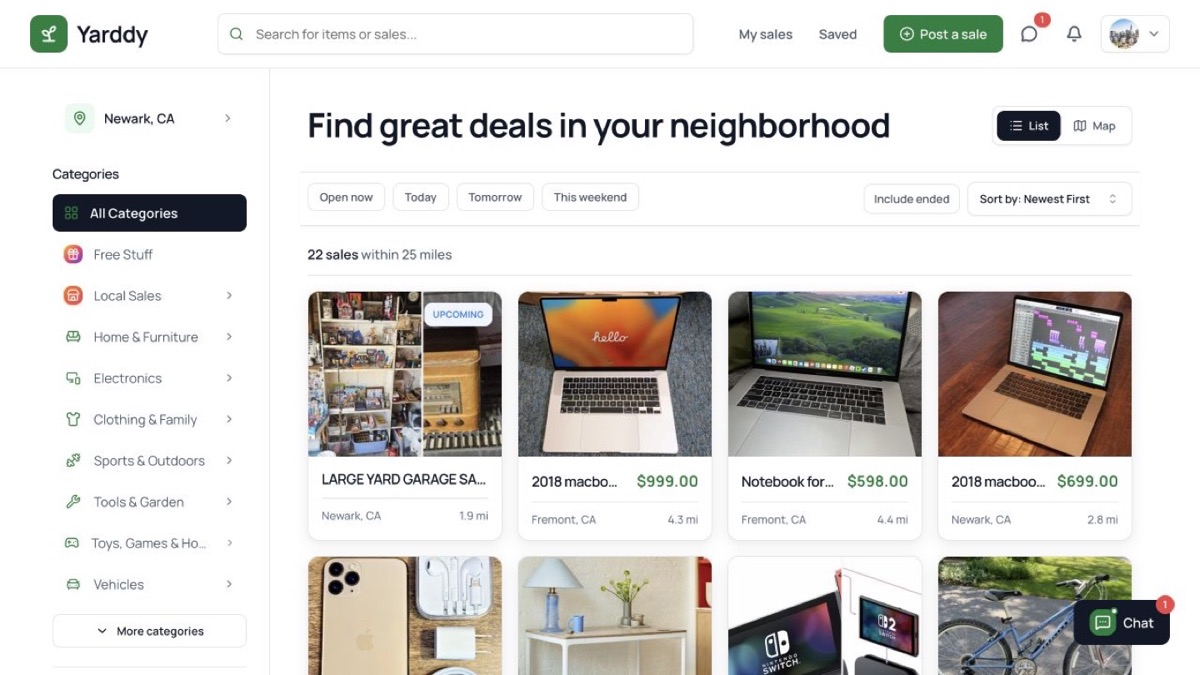
Compare real local inventory before pricing
Browse current Local Sales to understand how nearby sellers describe condition and value.